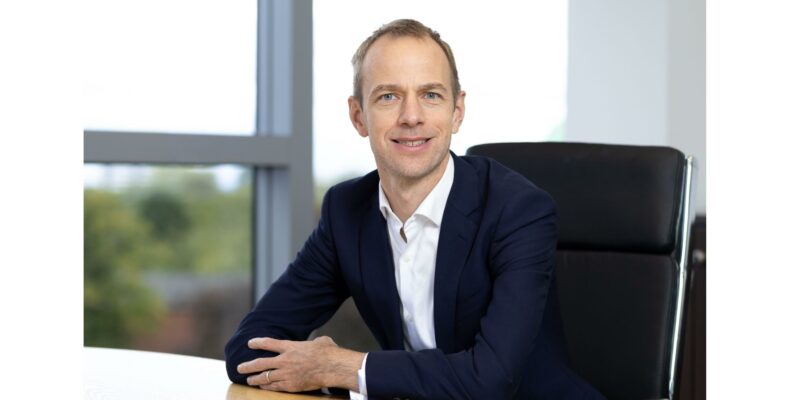
A career in intellectual property: from metallurgy to patents
Nicholas Braddon didn’t set out to become a patent attorney. It was during university, studying Natural Sciences and specialising in materials science and metallurgy, that he first heard of the profession. The mix of science and language appealed – and it still does.
“Words matter,” he says. “In patents, they define your client’s monopoly. That blend of precision and communication drew me in.”
After a short stint analysing steel markets, Nick joined the IP profession and hasn’t looked back. “I’ve been lucky – I genuinely enjoy what I do.”
Now, with over 20 years of experience, he’s a partner at Barker Brettell – a leading UK intellectual property firm known for its client-focused approach.
Specialising in engineering and emerging technologies
Nick is Head of the Energy Sector Group at Barker Brettell. He works closely with clients across engineering and the physical sciences – from start ups to international giants.
“I enjoy direct client work,” he explains. “Listening to inventors and translating their ideas into words that protect their business – that’s the challenge.”
His broad technical grounding in materials science and metallurgy gives him an edge when handling complex innovations. But it’s the ability to pick up new concepts quickly that really counts.
Trends in advanced engineering and IP
So, what’s exciting right now?
“Innovation is increasingly driven by user experience and sustainability,” Nick says. “Clients are asking: how can we do this better, cleaner, or smarter?”
He sees the energy transition and tightening regulations as major drivers of change. “We’re seeing huge developments in energy efficiency and digital integration across sectors.”
Technologies like sustainable design and AI-led engineering are clear areas of growth. And Nick believes the IP system is more than capable of supporting that evolution.
“People often say the law can’t keep up. But in my experience, the fundamental frameworks are versatile and generally fit for purpose. It’s about how we apply them.”
Tailoring IP strategy to fit
Nick supports a wide range of clients – from agile start ups to global corporations – and their needs differ.
“Larger companies often know their key markets. That can make the patent strategy more straightforward,” he says. “With start ups, there’s more uncertainty. So we focus on flexibility and cost control.”
His advice for R&D teams is simple: you probably have something worth protecting – even if it doesn’t feel ground breaking.
“If you’ve solved a problem, there’s often something patentable. Many inventors underestimate what’s protectable.”
And his advice doesn’t stop there. “Talk to a patent attorney early. Many firms offer free initial consultations – it’s better than missing your chance.”
The value of good advice
One of Nick’s strengths is in helping clients navigate uncertain or fast-evolving areas. He points to recent high-level cases as ones to watch.
“There’s a case at the Supreme Court that is looking at whether neural networks should be excluded as computer programs. It could shape how AI inventions are treated.”
A recent case in the European Patent Office examined to what extent the description should influence claim interpretation. “It’s technical, but it could affect outcomes in patent prosecution and patent scope across Europe,” he notes.
Opportunities for UK innovators
Nick is optimistic about the opportunities for UK-based engineering firms – if they act decisively.
“The biggest risk is failing to recognise and protect your IP,” he warns. “It’s part of building competitive advantage and attracting investment.”
He believes the UK’s reputation for innovation is strong, but businesses must make IP part of their strategy early on.
If you want learn more about Nick’s work and insights in advanced engineering and IP, please contact him here.
This article was originally commissioned by PatWorld to appear in it’s ‘Meet the IP Professional’ feature.